Key Takeaway
- Choose PTE Academic when an accepted university, college, professional body or Australia or New Zealand route asks for it.
- Choose PTE Core when an eligible Canadian permanent residence or citizenship application asks for this test.
- Choose PTE Academic UKVI when your UK application specifically requires a four-skill Secure English Language Test, also called a SELT.
- PTE Academic and PTE Academic UKVI have the same questions and scoring. The UKVI test adds the reporting details needed for relevant UK visa applications.
- PTE Core and PTE Academic both test Speaking, Writing, Reading and Listening, but their purpose, language setting and some question types are different.
- Do not choose a test only because it looks easier. Book the exact test named by the organisation that will use your result.

You are ready to book your PTE test. Then you see three similar names: PTE Academic, PTE Core and PTE Academic UKVI.
Which one should you choose?
The answer does not depend only on your country. It depends on why you need the test. A student applying to a Canadian college can need PTE Academic. A person applying for Canadian permanent residence can need PTE Core. Two people going to the UK can also need different tests because their courses and visa routes are different.
This guide explains the difference between PTE Academic and PTE Core, how PTE Academic UKVI differs from the standard Academic test, and which option matches common study, work and immigration goals. You will also see the current test format, important question-type differences and the checks to make before paying.
How Do PTE Academic, PTE Core and PTE Academic UKVI Compare?

The biggest difference is the purpose of the result. PTE Academic is mainly an academic English test. PTE Core uses everyday and workplace English for accepted Canadian immigration purposes. PTE Academic UKVI uses the same test content as PTE Academic but follows the reporting process needed for relevant UK visa routes.
| Point to compare | PTE Academic | PTE Core | PTE Academic UKVI |
|---|---|---|---|
| Main purpose | Worldwide study and accepted professional, work or migration uses | Accepted Canadian permanent residence and citizenship uses | UK applications that specifically require a four-skill SELT |
| English setting | Academic situations | Everyday and workplace situations | The same academic situations as PTE Academic |
| Skills tested | Speaking, Writing, Reading and Listening | Speaking, Writing, Reading and Listening | Speaking, Writing, Reading and Listening |
| Score scale | 10–90 | 10–90, with scores linked to Canadian Language Benchmark levels | 10–90, the same as PTE Academic |
| Approximate test time | About two hours | About two hours | About two hours |
| Important extra detail | The receiving organisation sets the accepted score | The Canadian programme sets the required CLB level | The result includes a Unique Reference Number for UK visa processing |
PTE Academic measures the English used in study settings. Universities and colleges can accept it for admission. Pearson also lists it for accepted work and migration uses in Australia and New Zealand and for selected professional registration in the United States. Acceptance and score requirements can differ, so always check the current rule for your course, visa or registration.
PTE Core measures practical English used in personal, public and workplace situations. Immigration, Refugees and Citizenship Canada, called IRCC, accepts PTE Core for Express Entry. Other eligible Canadian permanent residence and citizenship uses can also accept it. Check your exact programme before booking.
PTE Academic vs PTE UKVI: the questions, format and scoring are the same. PTE Academic UKVI is a separate booking option. Its result includes a Unique Reference Number, called a URN, which UK authorities can use during an applicable visa process.
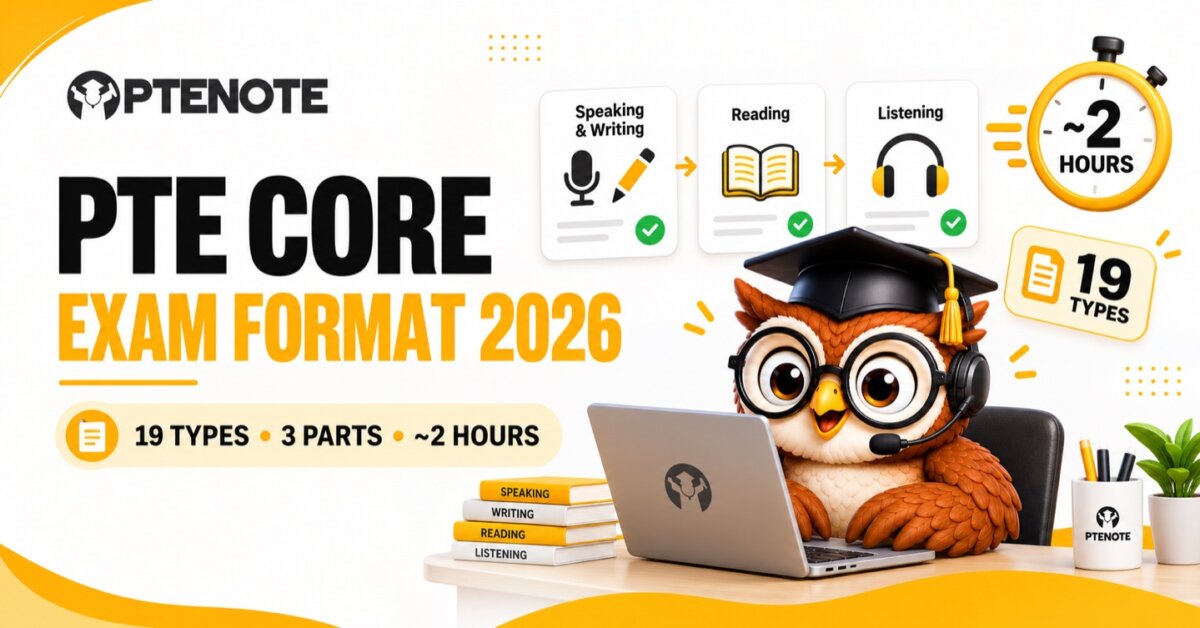
PTE Academic vs PTE Core format: Both tests have three parts—Speaking and Writing, Reading, and Listening—but the timings and number of question types differ.
| Section | PTE Academic and UKVI | PTE Core |
|---|---|---|
| Speaking and Writing | 76–84 minutes; 9 question types | 50–65 minutes; 7 question types |
| Reading | 23–30 minutes; 5 question types | 27–37 minutes; 5 question types |
| Listening | 31–39 minutes; 8 question types | 22–37 minutes; 7 question types |
| Total question types | 22 question types | 19 question types |
Many tasks are shared. Both tests include Read Aloud, Repeat Sentence, Describe Image, Respond to a Situation, Answer Short Question, Summarize Written Text and the same five Reading task names.
The important differences are easy to remember:
- PTE Academic and UKVI include Re-tell Lecture, Summarize Group Discussion and Write Essay.
- PTE Core includes Write Email instead of Write Essay.
- PTE Academic and UKVI Listening include Highlight Correct Summary. PTE Core Listening has seven task types and does not include this task.
- Similar task names can still use different topics, prompt lengths or answer rules. Prepare for the exact test on your booking.
Is PTE Core easier than PTE Academic? Neither test is easier for every person. PTE Core topics can feel more familiar if you often use English at work or in daily life. PTE Academic can feel more familiar if you read academic material and practise lecture-based tasks. The correct choice is still the test your application accepts.
How are the scores different? All three tests use a 10–90 scale, but the same number is not used in the same way for every application. A university can require an overall PTE Academic score and minimum skill scores. A Canadian immigration programme uses PTE Core score ranges to decide the matching CLB level. A UK route sets its own English level and approved-test requirement.
Do not compare your target with a friend’s score unless both of you have the same test and application requirement. Read the current score rule published by the organisation receiving your result.
Which PTE Test Should You Take for Your Goal?

Start with one question: Who will use your English test result? The university, government authority, visa route or professional body receiving the result has the final answer.
| Your goal | Test to check | What to confirm |
|---|---|---|
| Study at a university or college worldwide | PTE Academic | The institution accepts it for your exact course and intake |
| Canadian Express Entry or another eligible economic immigration route | PTE Core | The programme accepts PTE Core and the CLB level you need |
| UK work or study route that requires a four-skill SELT | PTE Academic UKVI | The exact test and score shown on the current visa or provider checklist |
| Degree-level study at a UK Higher Education Institution | PTE Academic or PTE Academic UKVI | Ask the institution which result it accepts for your course and visa process |
| Australia or New Zealand work or migration route | PTE Academic | The current government rule for your exact visa route |
| UK family, settlement or citizenship route | PTE Home may be required | The required PTE Home level: A1, A2 or B1 |
For Canada, purpose matters more than country. Check PTE Academic for study admission when your institution accepts it. Check PTE Core for Express Entry and other eligible immigration uses. Do not book PTE Academic for Express Entry simply because it contains the word “Academic” or because you previously used it for college admission.
For the UK, read the complete test name. Standard PTE Academic and PTE Academic UKVI contain the same questions, but only the UKVI booking produces the URN used for an applicable SELT process. If your instruction says PTE Academic UKVI, select that exact test.
PTE Home is a different test family. It checks Speaking and Listening for specific UK routes. If your checklist names PTE Home A1, A2 or B1, none of the three tests compared above replaces it.
Sometimes a student needs to meet both an admission rule and a visa rule. Check both. If you are not sure whether one result can meet both requirements, ask the institution and the relevant government authority before paying.
What Should You Confirm Before Booking a PTE Test?

A few careful checks can prevent you from paying for the wrong PTE test.
- Exact test name: Confirm PTE Academic, PTE Core, PTE Academic UKVI or the required PTE Home level.
- Application purpose: Check whether the result is for study, work, migration, permanent residence, citizenship or professional registration.
- Receiving organisation: Use the current page or written reply from the organisation that will receive your result.
- Required score: Note the overall score, minimum skill scores or CLB level that applies to you.
- Approved test centre: A UK SELT must follow the approved test and location rules for the route.
- Identity details: Make sure the name in your myPTE account matches the accepted passport you will use on test day.
- Appointment details: Read the test, centre, date and time again before confirming the order.
If you book the wrong test, you can receive a real score report that your application cannot use. PTE Academic cannot be changed into PTE Core after the test. A standard PTE Academic result also cannot receive a UKVI URN later.
If you notice a wrong test after booking, open your myPTE account and check Pearson’s current cancellation or rescheduling options immediately. Do not wait until test day.
After you have confirmed the correct test, you can use our PTE exam booking service to complete the appointment. Select the exact test type in the booking form and approve the centre, location, date and time only after checking the summary. If you need step-by-step help, our complete PTE booking guide explains the full booking journey and available routes.
FAQs
What is the main difference between PTE Academic and PTE Core?
PTE Academic uses academic English and is mainly used for study and selected professional, work or migration purposes. PTE Core uses everyday and workplace English for accepted Canadian permanent residence and citizenship applications. Their timings and some question types are also different.
Can I use PTE Academic for Canada PR?
For Express Entry, IRCC tells applicants to choose PTE Core as the PTE English test. Check the current rule for your exact immigration programme before booking.
Can I use PTE Core for study in Canada?
Do not assume that PTE Core is accepted for admission. Canadian universities and colleges can accept PTE Academic for study. Check the exact English-test list for your institution and course.
Is PTE Core easier than PTE Academic?
Not for everyone. PTE Core uses everyday and workplace topics, while PTE Academic uses academic topics. The easier-feeling test depends on your English experience, but you must choose the test accepted for your application.
Are PTE Academic and PTE Academic UKVI the same test?
They have the same content, format and scoring. PTE Academic UKVI is a separate booking option that includes a Unique Reference Number for applicable UK visa processing.
Is PTE Academic UKVI harder than PTE Academic?
No. The questions and scoring are the same. The difference is the UKVI security and result-reporting process, not the difficulty of the English test.
Which PTE test should I take for a UK student visa?
It depends on the course level, education provider and visa requirement. A degree-level course at an eligible Higher Education Institution can accept standard PTE Academic. Other routes can require PTE Academic UKVI. Follow the exact test name given by the provider and visa checklist.
Do PTE Academic and PTE Core have the same question types?
They share many tasks, but they are not identical. PTE Academic includes tasks such as Re-tell Lecture, Summarize Group Discussion and Write Essay. PTE Core includes Write Email and has a different total task mix.
Do all three tests use the 10–90 score scale?
Yes. However, the score is used differently. Universities and other organisations set their PTE Academic requirements. Canadian immigration programmes connect PTE Core score ranges to CLB levels. UK routes set their own score and approved-test rules.
Can I change the PTE test type after booking?
Do not assume that you can switch the test type. Check the options in your myPTE account and Pearson’s current cancellation or rescheduling rules. Contact Pearson support quickly if you selected the wrong test.
Conclusion
Choose the PTE test that matches the purpose of your application:
- PTE Academic for accepted worldwide study and selected professional, work or migration uses;
- PTE Core for accepted Canadian permanent residence and citizenship uses; and
- PTE Academic UKVI when a UK route specifically requires a four-skill SELT.
Do not choose by country or difficulty alone. Confirm the exact test name and required score with the organisation receiving your result. Once that answer is clear, you can book the correct test without guessing.
References and Useful Resources
- Pearson: Which PTE test is right for me? — Compare the official purposes of PTE Academic, PTE Core, PTE Academic UKVI and PTE Home.
- Pearson: PTE Academic and UKVI test format — Check the current sections, timings and question types.
- Pearson: PTE Core test format — Check the current Core sections and tasks.
- Pearson: PTE Core scoring — Understand the 10–90 scale and CLB connection.
- IRCC: Language tests for Express Entry — Confirm the accepted test and current PTE Core score-to-CLB table.
- UK government: Approved Secure English Language Tests — Check the test and level required for an applicable UK route.
- Our PTE exam booking service — Book after confirming the exact test required for your application.
- Our complete PTE booking guide — Read the full booking process, payment routes and confirmation checks.