Book PTE Exam
 PTE Voucher
 PTE Mock Tests
 Pricing
 About Us
 Blog
 Practice


Key Takeaway
- Check that your essay answers the question before polishing individual words.
- Read for meaning first, then check grammar, spelling and punctuation.
- Keep your opening view and conclusion consistent.
- After an edit, read the whole changed sentence again.
- Use the worked example below to practise spotting and explaining corrections.
You have finished your essay and a few minutes remain. You read it again, but nothing looks wrong. Where do you start?
Try reading with a specific job. First check your answer to the question. Then look for language errors. We’ll use one complete essay to show the difference between fixing a word and fixing an idea.
In this PTE essay proofreading lesson, you can check a full first draft and see our edits. We explain each change. Try finding the problems before you read our notes.
What should you check before editing your essay?
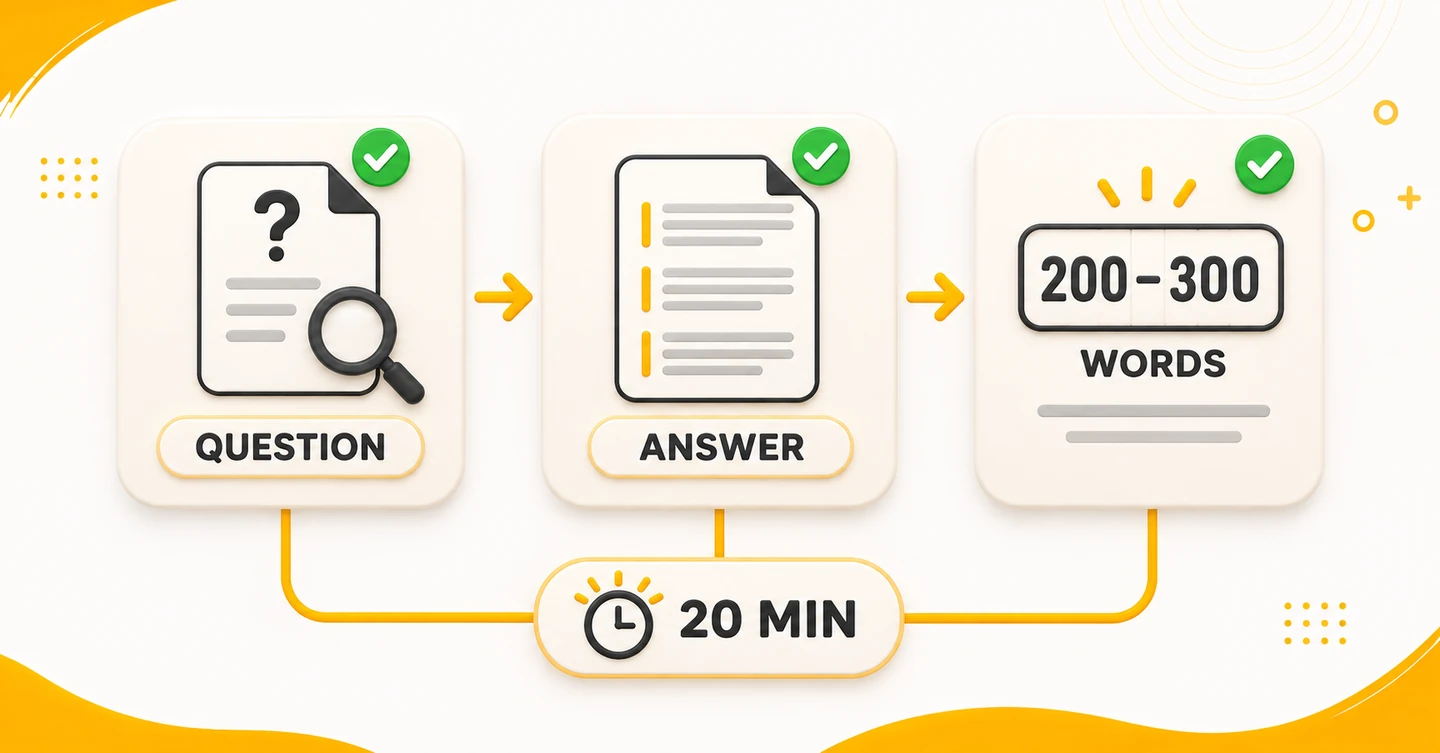
Start with the essay question. We’ll call this the prompt. What opinion or issue must you discuss? Does your answer address it?
Pearson gives you 20 minutes for Write Essay. Planning, writing and checking share that allowance. Your essay must contain 200–300 words. The on-screen Word Count shows how many words you have written. These details come from Pearson’s current Write Essay guidance.
Pearson assesses how well your essay addresses the topic. Sentence structure, punctuation and capital letters are assessed under Grammar usage and mechanics. Spelling is also assessed. So our checking order starts with the answer, then moves to the language.
Use these steps:
- Read the prompt again. Identify the exact question you need to answer.
- Compare the opening and conclusion. Check that they express the view you intended.
- Read each paragraph for meaning. Look for an unexplained point or a sentence that belongs to another topic.
- Check the sentences. Look closely at verbs, missing words, spelling and punctuation.
- Check the edited answer. Read changed sentences in full and check the word count before moving on.
How do we proofread a complete PTE Academic essay?
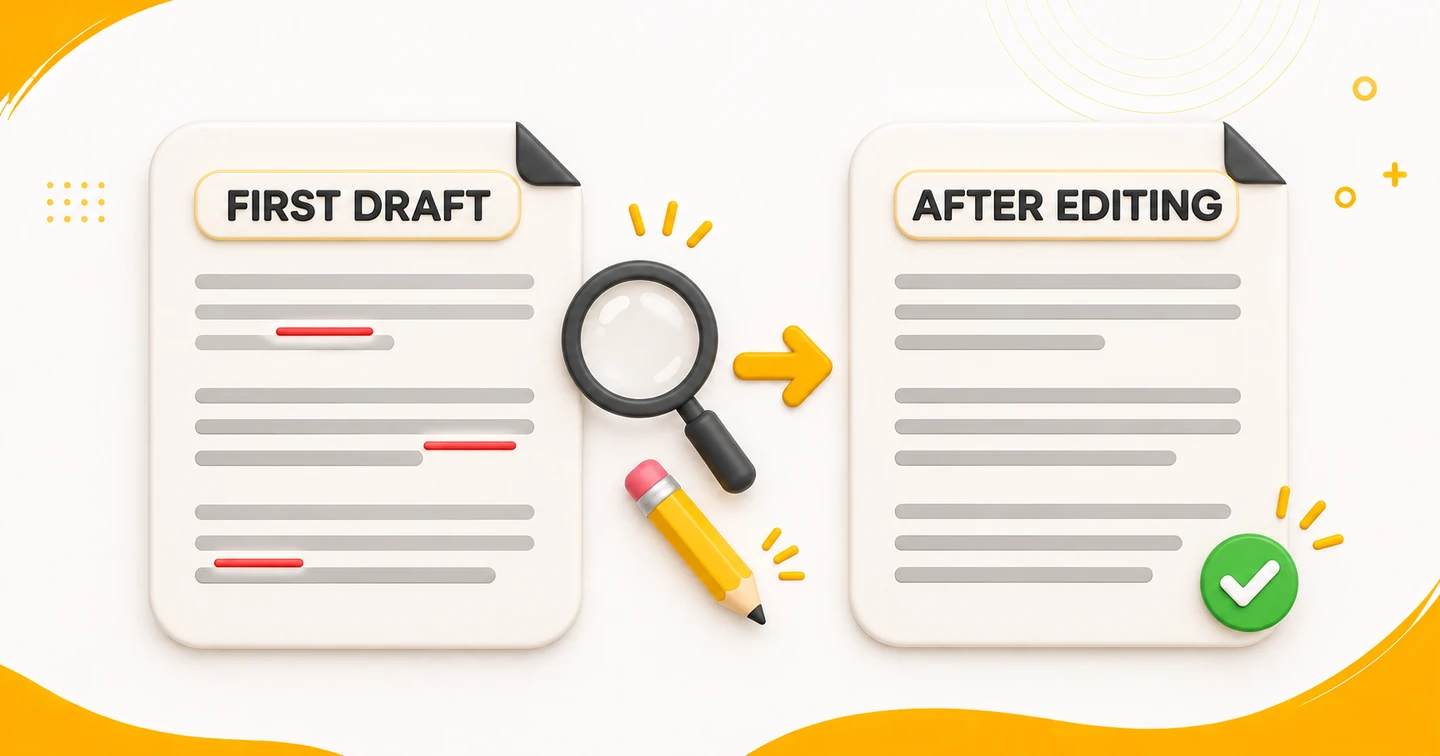
We wrote the question and both essays below for this lesson. They are not real Pearson test questions or scored answers. We put errors in the first draft for you to find.
Practice prompt
Universities should provide a quiet study space that stays open into the evening. To what extent do you agree or disagree? Support your view with reasons and examples.
First draft — find the problems before checking our edits
Many students study after class, so they need a quiet room. I agree that a university should keep a study space open into the evening. It gives them a place to work away from noise at home. The aim is to meet this need, rather than keep every building open all night. This also gives students a choice. They can work at home when it is quiet and use the room when they need to focus.
First, a quiet room help students organise their study time. Some students share a small home and have no desk of their own. A quiet space gives them a place to read, plan an essay and check their notes. Each student need to know when the room is open. The univeristy should post these hours online and at the door.
Second, staff need a clear plan. The room is useful, it still needs staff and clear safety rules. For example, staff can open one room near the front door, rather than a whole building. Staff can count visits before changing the hours. These checks helps staff see if people use the space. Public parks also need more trees and better paths.
In conclusion, I disagree that the study space should stay open into the evening. One small room is a practical starting point. Staff can set clear hours and check use, while students have a calm place to work.
Pause here. Check the writer’s view before you look for spelling errors. Does the last paragraph match the first one?
What did we change, and why?
| Draft wording | Our edit | What to check |
|---|---|---|
| “a quiet room help” | “a quiet room helps” | “A quiet room” takes “helps” here. In the present simple, most verbs add s or es with he, she or it. |
| “Each student need” | “Each student needs” | “Each” takes a singular verb. Read the subject and verb together: “Each student needs”. |
| “univeristy” | “university” | The correct spelling is “university”. Check the letter order rather than reading only the shape of the word. |
| “The room is useful, it still needs staff and clear safety rules.” | “The room is useful, but it still needs staff and clear safety rules.” | A comma alone cannot join these two complete sentences. We add “but” to connect the contrasting ideas. |
| “These checks helps” | “These checks help” | Use “help” with the plural subject “these checks” in this present-simple sentence. |
| “Public parks also need more trees and better paths.” | Remove the sentence. | This sentence is about parks. The question asks about study space. Remove the sentence that does not fit. |
| “In conclusion, I disagree” | “In conclusion, I agree” | The opening and supporting paragraphs argue for an evening study space. Restore that view in the conclusion. |
For help with these rules, read the British Council’s guide to present-simple verbs. Purdue OWL also explains how subjects and verbs match and how to fix common errors.
Notice what we left alone. We kept the reasons, paragraph order and example of opening one room. We did not replace clear words with harder ones. Read each proposed change and ask what problem it fixes.
The edited essay
Many students study after class, so they need a quiet room. I agree that a university should keep a study space open into the evening. It gives them a place to work away from noise at home. The aim is to meet this need, rather than keep every building open all night. This also gives students a choice. They can work at home when it is quiet and use the room when they need to focus.
First, a quiet room helps students organise their study time. Some students share a small home and have no desk of their own. A quiet space gives them a place to read, plan an essay and check their notes. Each student needs to know when the room is open. The university should post these hours online and at the door.
Second, staff need a clear plan. The room is useful, but it still needs staff and clear safety rules. For example, staff can open one room near the front door, rather than a whole building. Staff can count visits before changing the hours. These checks help staff see if people use the space.
In conclusion, I agree that the study space should stay open into the evening. One small room is a practical starting point. Staff can set clear hours and check use, while students have a calm place to work.
Now compare the two conclusions. The edit to “agree” is only one word, but it restores the writer’s intended position. Keep this type of check separate from your spelling check.
Treat the edited version as an example to study, not an answer to memorise. We have not assigned it an official PTE score.
What can you check in the final two minutes?
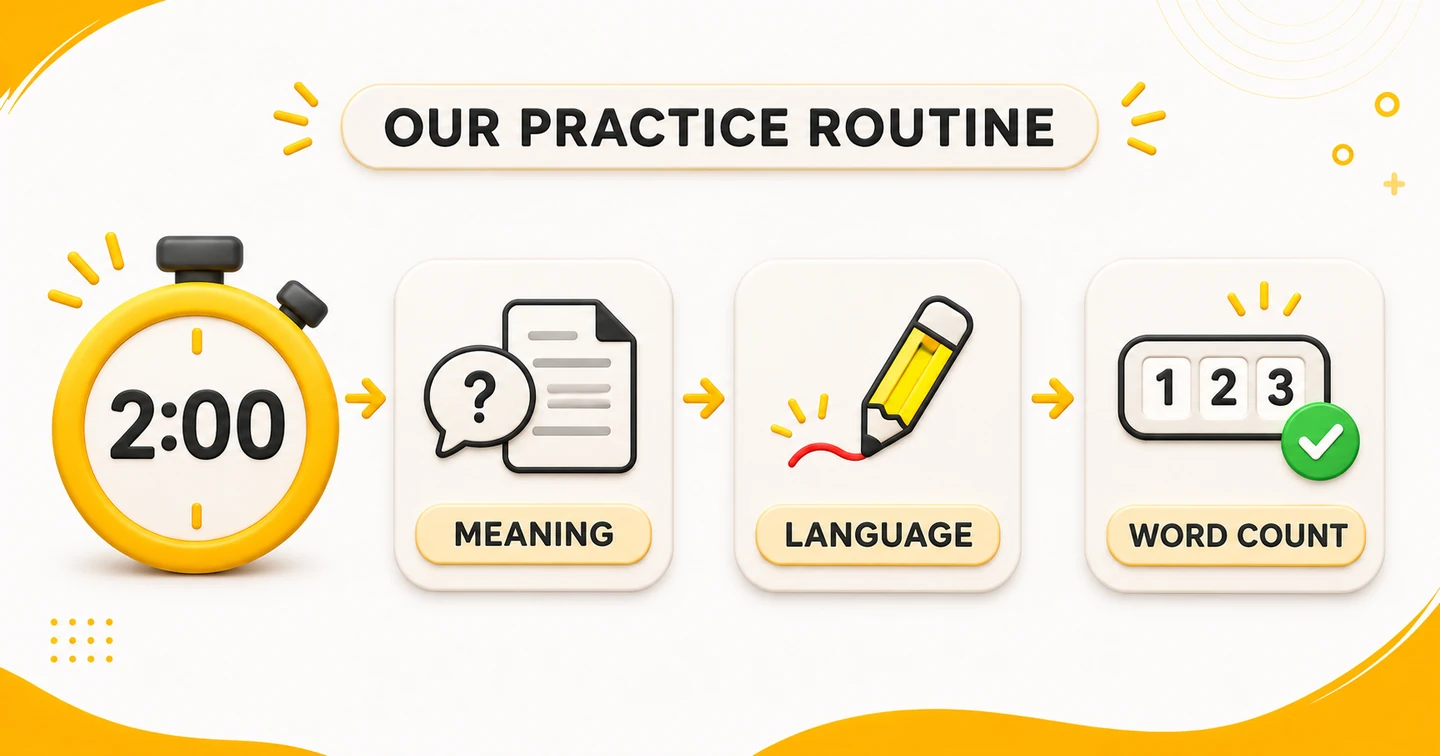
Try leaving the final two minutes of your practice attempt for checking. This is our study suggestion, not a separate allowance or a rule from Pearson. Adjust the plan after seeing how long your own writing takes.
First, check the answer. Read the prompt, your opening view and the conclusion. Look for a missing part of the question or an accidental change from “agree” to “disagree”.
Then, scan for your repeated language errors. Start with the mistakes you found in recent practice. Read a verb with its subject. Check spellings you often mix up. Look at sentence endings and any place where you joined two ideas with a comma.
Before moving on, check the changes. Read the whole sentence after each edit. Check the word count again. Avoid starting a new point or writing every paragraph from scratch at this stage.
If little time is left, fix a clear error you can explain. Leave a correct sentence alone. Save new words and phrases for study time.
How can you practise proofreading between essays?
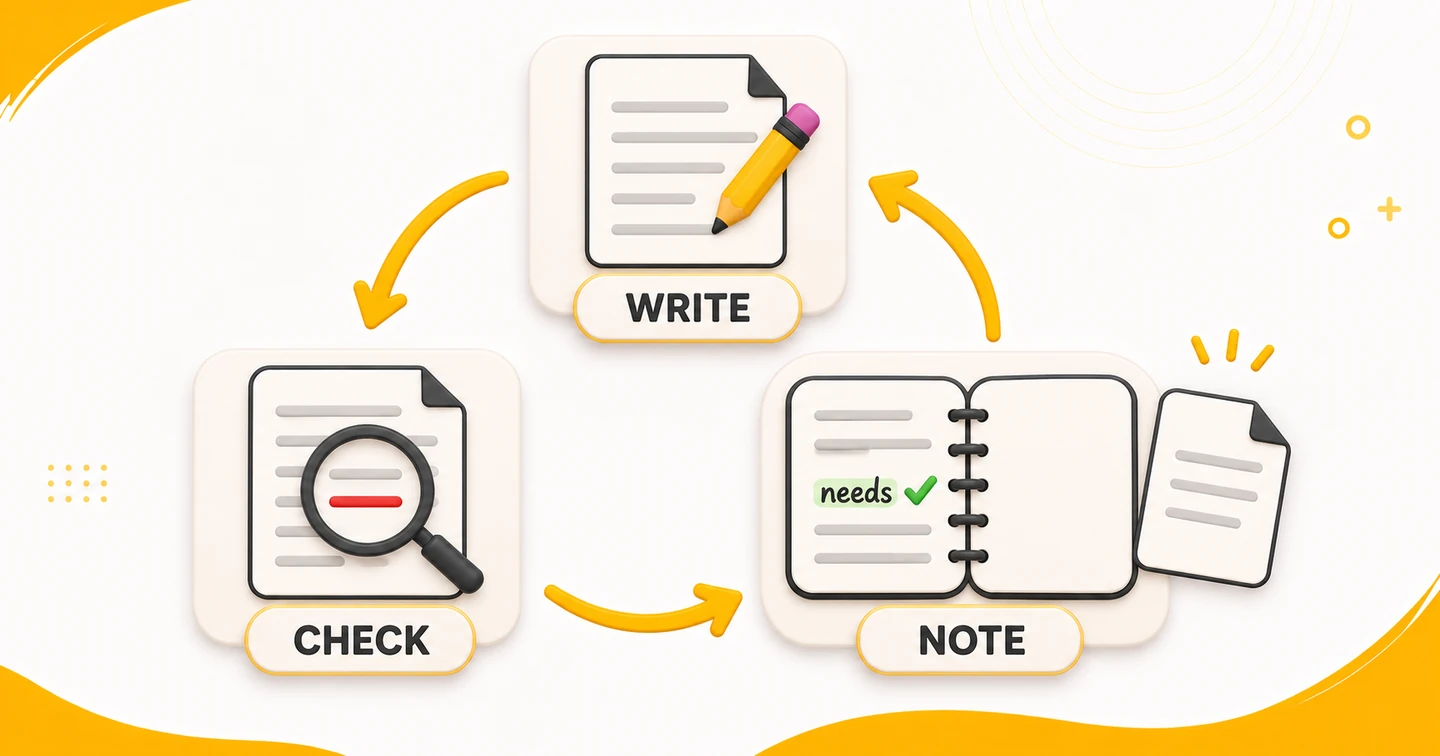
Begin with a short correction exercise. Find one grammar or punctuation error in each sentence:
- The library open late on Fridays.
- Each student need a quiet desk.
- The room is small, it has enough light.
Write your corrections before reading the answers.
Show the answers and explanations
- The library opens late on Fridays. Use “opens” with “the library” in the present simple.
- Each student needs a quiet desk. “Each” takes a singular verb.
- The room is small, but it has enough light. Add “but” after the comma to connect the two complete sentences. A full stop between them is another correct option.
For your next full practice essay, save the first draft before making corrections. Then use two separate reads: one for the answer and one for the language.
Keep a small note of one repeated error. Make the note specific: “I wrote ‘Each student need’; I need ‘Each student needs’.” Under it, write a fresh sentence with “each”. In the next essay, look for that pattern before adding another item to your list.
When you study without a timer, check any fix you cannot explain. Use a dictionary or a trusted grammar guide. For example, Collins lists the spelling “university”. Do not change a word just because it looks unfamiliar.
For help finding official study material, our Pearson Smart Prep guide explains where to start.
Frequently asked questions
Do I need to use only British spelling?
No. PTE Academic recognises spelling conventions (spelling styles) from the United States, the United Kingdom, Australia and Canada. Use one convention consistently within an answer. That requirement is stated in Pearson’s Write Essay spelling guidance.
Should I rewrite the whole essay while checking it?
We recommend correcting clear problems first. Rebuild a paragraph during untimed study when you want to work on its argument. In a timed attempt, watch the time left before starting a large rewrite.
Does this correction table tell me my PTE score?
No. The table explains our edits to this lesson’s essay. It is not a Pearson score report. Use it to learn what to fix and why.
What if I cannot find any mistakes in my own essay?
Choose one checking job rather than reading without a purpose. Try checking only whether the conclusion matches your opening view. On the next read, focus on verbs. During study, ask a teacher or study partner to explain any errors you missed.
What should you do next?
Take an essay you have already written. Read its question, then compare your opening and conclusion. Make one clear correction and explain why you made it before moving to the next sentence.